There’s something almost disarming about how Stardew Valley begins: you inherit a run-down farm, a handful of tools, and a quiet invitation to start again. No pressure. No timeline. Just soil, seasons, and the steady hum of possibility.
Maybe that’s why the game feels less like an escape and more like a mirror. It reflects back the parts of life we often rush through – the slow growth, the small choices, the emotional weather we pretend not to feel.
In Stardew Valley, nothing blooms overnight. You water, you wait, you show up again tomorrow. And somehow, that rhythm feels familiar. It feels like the real work we do in our own lives: tending to relationships, healing old wounds, building new habits, learning to rest without guilt. The game doesn’t reward speed; it rewards presence. It rewards intention.
And isn’t that the lesson we forget most easily?
In Pelican Town, you learn quickly that everyone carries something unseen. Shane’s heaviness. Emily’s hopefulness. Abigail’s restlessness. They’re pixelated, sure, but their stories echo the people we know – and the parts of ourselves we don’t always name. The game nudges you toward empathy without ever announcing it. You give gifts, you listen, you check in. You learn that connection grows the same way crops do: slowly, quietly, with consistency.
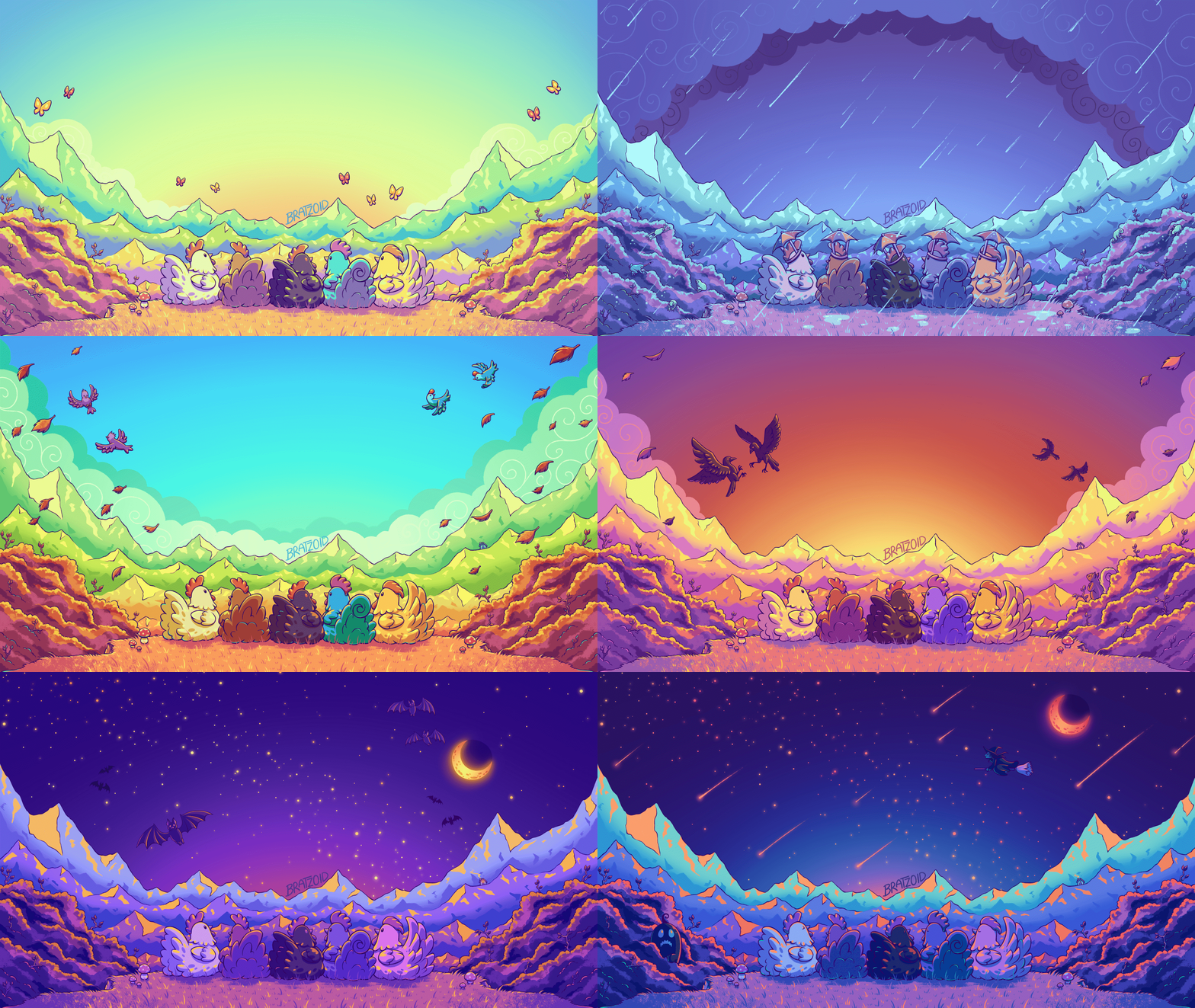
There’s also the gentle reminder that seasons change whether you’re ready or not. Spring doesn’t wait for you to feel motivated. Winter doesn’t apologize for slowing everything down. Stardew teaches you to work with the season you’re in, not against it. Real life asks the same thing, though we often resist it – trying to force summer energy in the middle of our emotional winter.
And then there’s the mine. The place you go to face the things that scare you, armed with nothing but a rusty sword and a little courage. It’s messy down there. Unpredictable. But every level you descend is a small act of bravery. Real life has its mines too – conversations we avoid, boundaries we’re afraid to set, truths we’re not ready to say out loud. But like in the game, every time we face them, we come back a little stronger.
What I love most is that Stardew Valley never asks you to be perfect. It just asks you to keep tending – to your land, your people, your inner world. Some days you harvest a whole field. Some days you barely make it out of bed. Both days count.
Maybe that’s the quiet magic of it: Stardew reminds us that a good life isn’t built on grand gestures. It’s built in the small, steady choices we make when no one is watching. The way we water what matters. The way we prune what no longer serves us. The way we let ourselves grow at the pace of real seasons, not imagined deadlines.
In the end, Stardew Vallet isn’t just a game about farming. It’s a reminder that we’re all cultivating something – hope, healing, courage, connection. And like any good harvest, it takes time.
The beauty is in the tending.